Can one person receive ecommerce returns?
Yes for a controlled low-volume pilot with suitable products, documented intake, storage limits, privacy controls and clear merchant instructions.
ecommerce returns without warehouse
Ecommerce returns without a warehouse are possible when a local receiver follows a narrow, documented workflow.
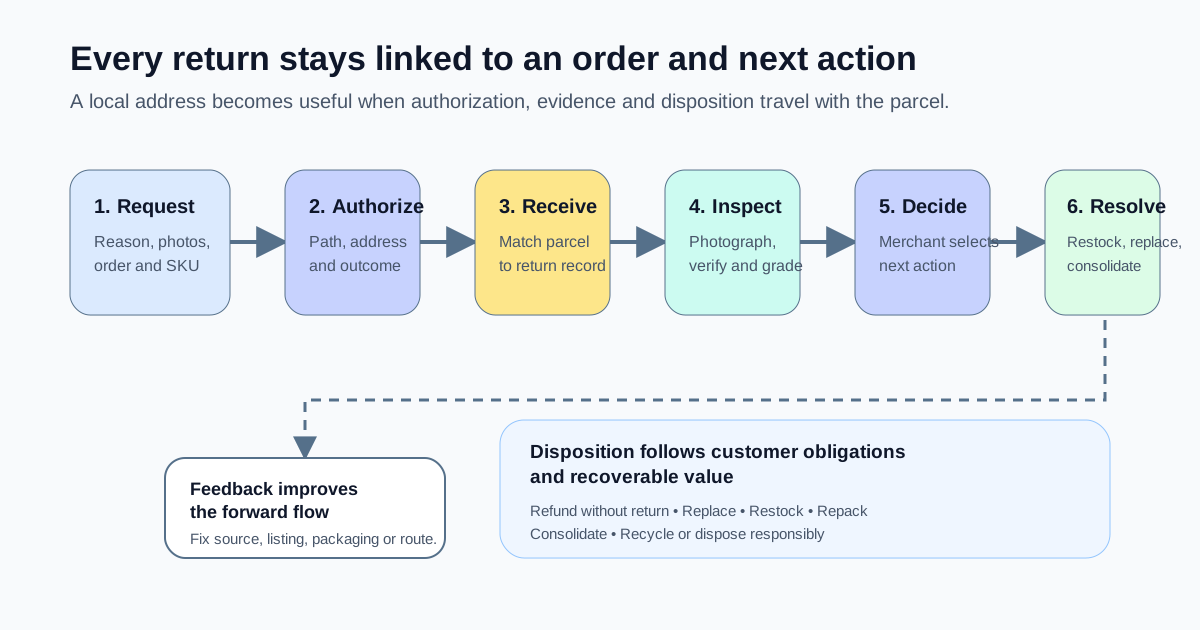
The merchant creates the return record before shipment; the receiver logs, photographs and grades the item; the merchant chooses the next action.
This can validate demand for local reverse logistics before fixed warehouse overhead makes sense.

Section 1
Start with a limited product scope, parcel size, monthly volume, storage limit and service area. Exclude hazardous, highly regulated, perishable or hygiene-sensitive categories unless the operator and process are qualified. The receiver's job is evidence and custody, not improvising customer policy or repair decisions. If this needs to become a real operating process, map the order-linked returns workflow with ProveedorPro.
Section 2
The merchant marks the order for return, selects a reason, uploads evidence and receives an authorization plus address. The receiver sees the expected order and instruction. Unannounced parcels go to an exception queue. This one control prevents a spare room from becoming an archaeological site of unidentified ecommerce. For the next part of the decision, review Ecommerce returns management from customer request to disposition.
Section 3
Record arrival date, label, outer package, item, variant, accessories and visible condition. Photograph defined angles and assign a provisional grade. Use privacy-safe tools and restrict access to merchant information. The checklist should be short enough to follow every time and specific enough to support refund and supplier decisions.
Section 4
Every item needs an owner, instruction and deadline. Options include repack and ship to a new customer, consolidate, forward to another facility, recycle or dispose where appropriate. Charge or track handling and storage transparently. The merchant should approve destructive or materially irreversible actions. This also connects directly to Ecommerce returns management in the USA: process, service and control.
Section 5
Use low-value products at pilot stage, separate merchant inventory, reconcile counts and limit accumulated value. Verify identity and address, document custody and keep replacement or recovery procedures proportionate. The model is suitable for cheap dropshipping items precisely because exposure can be capped while the workflow proves itself. When the receiving scope and destination are clear, request a returns-pilot review.
Section 6
Track monthly parcels, handling time, peak storage, recovery value, response time and errors. A dedicated site makes sense when volume, product requirements or merchant demand exceed the controlled receiver model. ProveedorPro can use the pilot as a bridge into country-specific returns service and eventually full sourcing and fulfillment. Set review triggers in advance: sustained parcel count, storage occupancy, missed service levels, product value or regulated handling. This prevents both premature rent and a residential pilot quietly growing beyond its safe design.
Run this final operating check with the exact SKU and destination. A supplier badge or successful app connection does not replace product-level verification.
Verify current platform, trade, consumer or quality requirements before making a customer promise. Product and destination rules can change.
Yes for a controlled low-volume pilot with suitable products, documented intake, storage limits, privacy controls and clear merchant instructions.
Capture authorization/order reference, arrival, package and item condition, variant/accessories, photos, grade and disposition status.
Use expected-return records, labeled storage, merchant separation, counts, deadlines and order-linked disposition.
When sustained volume, safety, storage, staffing or service requirements exceed the local-receiver model and justify fixed overhead.
Share the destination, expected parcel volume and product types so the receiving, evidence, storage and disposition workflow can be reviewed together.