What is ecommerce returns management?
It is the complete system for eligibility, authorization, shipping instructions, receiving, inspection, refund or exchange, inventory action, reporting and final product disposition.
ecommerce returns management USA
Ecommerce returns management is the complete system that moves a US customer request from eligibility and authorization to shipping instructions, local receiving, inspection, refund or exchange, inventory action and final disposition.
ProveedorPro can support the physical receiving and evidence layer while the merchant retains policy, customer communication and approval control.
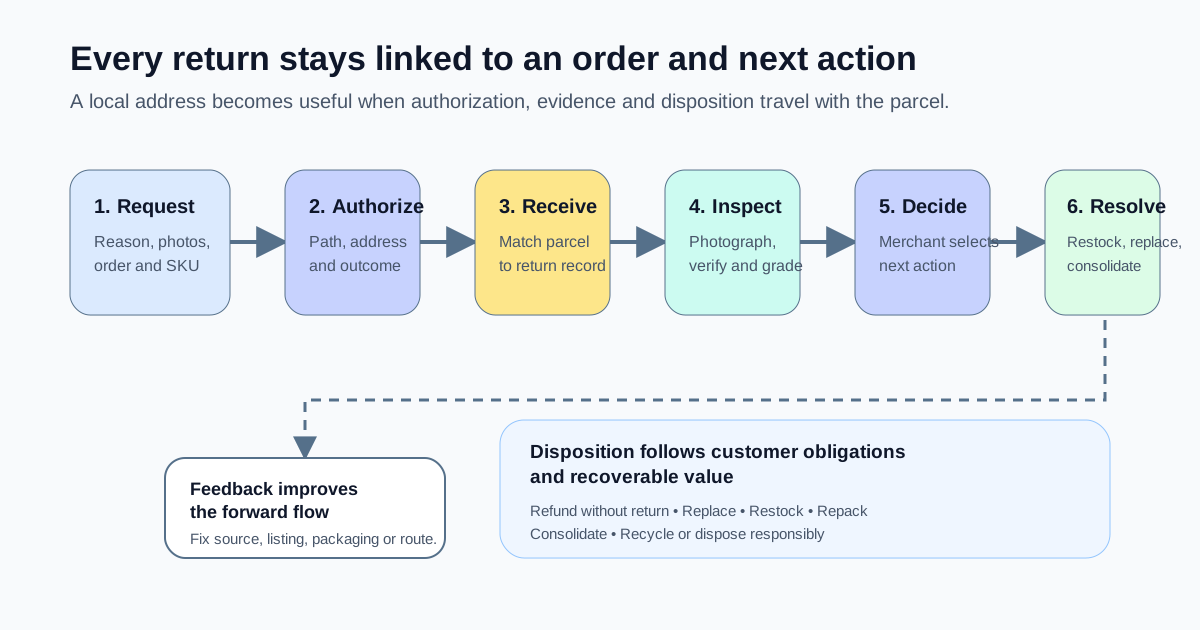
A return address is useful only when every parcel stays linked to its order, condition, cost and next decision.

Section 1
Start before the parcel moves. Define the return window, eligibility rules, final-sale exclusions, customer-paid versus merchant-paid shipping, approval authority and promised outcome. Then connect authorization, label or address instructions, carrier tracking, local intake, inspection, refund or exchange approval, inventory updates and final disposition. The merchant owns the customer-facing policy; the operator performs only the documented physical steps. If this needs to become a real operating process, map the order-linked returns workflow with ProveedorPro.
Section 2
Give each expected return an order number, SKU, quantity, reason, approved address or label, customer promise and required evidence. Decide whether the request begins in Shopify, WooCommerce, a marketplace, support inbox or returns portal, then define how that record reaches the receiving team. Protect personal data and share only the fields needed for intake, proof and resolution. For the next part of the decision, review Dropshipping USA: build for the market customers actually experience.
Section 3
A controlled local pilot can fit low volume, suitable products and strict storage limits. Higher volume, regulated goods, expensive inventory, refurbishment or rapid exchanges may require a professional 3PL or specialized returns center. Compare parcels per month, item risk, inspection depth, storage days, resale needs, integration requirements and recovered value—not the glamour of a warehouse tour.
Section 4
Photograph the outer package, label, item, included parts and visible damage. Confirm the SKU and variant, apply the merchant's condition grade and record any hygiene or safety restriction. The merchant can then authorize restock, repack, exchange, resale, consolidation, supplier claim, donation, recycling or disposal. The operator records observable facts; the merchant makes the commercial decision. This also connects directly to US dropshipping suppliers: verify the stock, source and route.
Section 5
Physical receipt does not automatically equal refund approval. Define whether a refund, replacement, exchange or store credit can be issued before inspection, after carrier acceptance or only after grading. Record the responsible team and deadline for every handoff. This prevents the customer from waiting while the warehouse and support team each assume the other owns the next step. When the receiving scope and destination are clear, request a returns-pilot review.
Section 6
Track return shipping, receiving, inspection, storage, repacking, outbound movement, refund, replacement and recovered value. Use a disposition threshold for low-value items and a storage stop date for every received unit. A US address can avoid uneconomic international returns, but it should not create months of handling and storage that cost more than the product.
Section 7
Review return rate by SKU and reason, authorization time, carrier transit, intake time, complete-photo rate, decision time, refund or exchange completion, cost per resolved return, recovery rate and days in storage. Separate customer-remorse returns from defects, wrong variants, transit damage and listing gaps so one average does not hide the part of the operation that needs fixing.
Section 8
Group defects, wrong variants, damage, missing parts and expectation gaps by SKU, supplier, package and listing. Use the evidence to change product specifications, quality checks, packaging, instructions, images or product-page language. Returns management improves margin when the record changes the source operation instead of becoming an isolated refund.
Section 9
ProveedorPro can connect return records with China sourcing, quality control, packaging and outbound fulfillment while supporting a defined US receiving workflow. Start with one product scope, return volume estimate, evidence standard, storage limit and disposition ladder. Expand only after intake time, decision time, recovered value and source corrections show that the process solves problems instead of merely moving boxes.
Run this final operating check with the exact SKU and destination. A supplier badge or successful app connection does not replace product-level verification.
Verify current platform, trade, consumer or quality requirements before making a customer promise. Product and destination rules can change.
It is the complete system for eligibility, authorization, shipping instructions, receiving, inspection, refund or exchange, inventory action, reporting and final product disposition.
A controlled local pilot may work for suitable products and low volume when expected-return records, trained receiving, storage limits and disposition rules are in place. Higher-risk or higher-volume programs may require a specialized facility.
They receive expected parcels, document condition, verify the item, store it temporarily and execute approved disposition steps.
Outsourcing can fit when the provider's receiving, inspection, integration, reporting, storage and disposition scope matches the products and volume. Keep policy, customer promises and approval ownership explicit.
Track return rate and reasons, authorization and intake time, complete evidence, decision time, cost per resolved return, recovery value, refund or exchange completion and days in storage.
Sometimes, after condition and safety checks and when applicable law and product type allow. Use explicit merchant rules.
Return evidence reveals source and packaging problems, while merchants who need reverse logistics often also benefit from controlled sourcing and forward fulfillment.
Share the destination, expected parcel volume and product types so the receiving, evidence, storage and disposition workflow can be reviewed together.