Where should dropshipping customers return products?
Use the address and path stated in the approved return. It may be a local receiver, warehouse or other location; sending low-value items overseas is not always rational.
dropshipping returns
Dropshipping returns are difficult because the merchant, customer, supplier and inventory may be in different countries.
The solution is not to send every parcel back to the source.
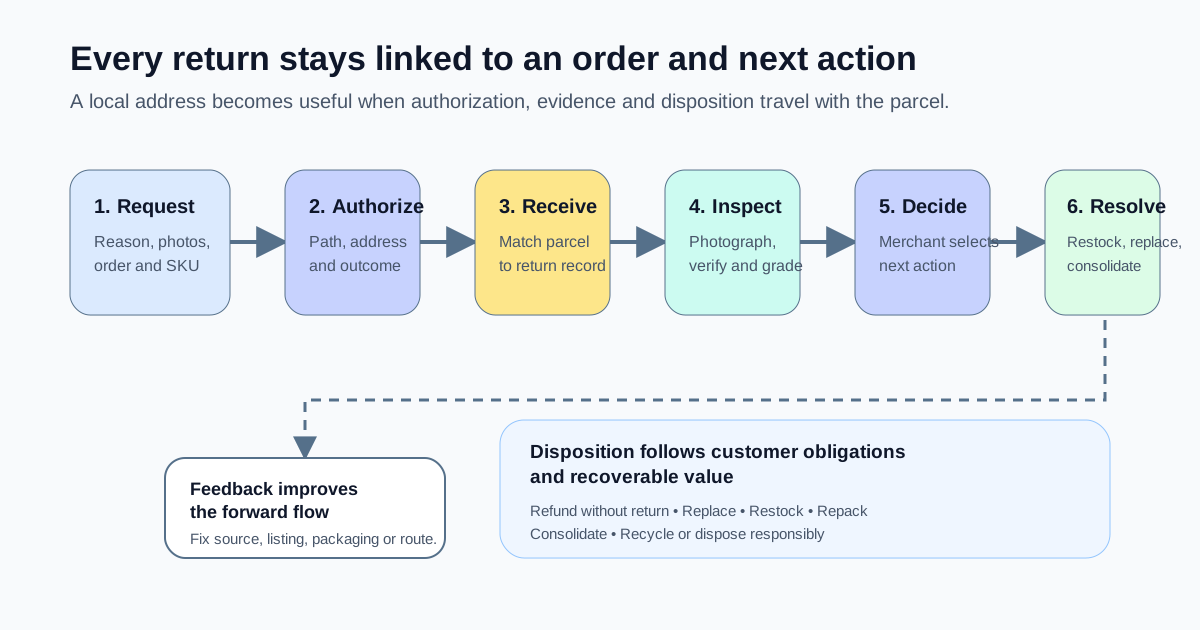
Link the order and evidence, then choose refund, replacement, local receiving, consolidation or disposal based on customer obligations, product value and recoverable economics.

Section 1
Identify defect, wrong item, damage, non-delivery, remorse or exchange. Review the store policy and applicable law before choosing the operational path. Ask only for reasonable evidence and avoid making the customer solve supplier geography. The merchant owns the resolution even when another party shipped the product. If this needs to become a real operating process, map the order-linked returns workflow with ProveedorPro.
Section 2
Compare item value, reverse postage, inspection cost, safety, resale probability and supplier remedy. Low-value verified defects may justify replacement or refund without return. Higher-value or recoverable items may go to local receiving. Suspicious patterns can require additional evidence, but anti-fraud controls should not become a blanket excuse to delay legitimate customers. For the next part of the decision, review Ecommerce returns management from customer request to disposition.
Section 3
Create a return record before shipping: order, SKU, reason, photos, decision, address and expected parcel. This lets a local receiver identify the merchant and instruction immediately. It also keeps supplier claims tied to exact variants and batches rather than anecdotal messages in support chat.
Section 4
A local operator can receive, photograph, grade, repack, consolidate or dispose. Define storage limits and response times. The operator should not decide refunds or resale eligibility without merchant rules. Start with a lightweight receiving model and add a warehouse only when volume and recovery value earn it. This also connects directly to Ecommerce returns management in the USA: process, service and control.
Section 5
Restock only verified, safe products. Keep merchant-owned items separated and track quantities. Consolidate back to a fulfillment location when the recovered value exceeds handling and transport. For cheap goods, a timely replacement from China or local purchase can cost less than weeks of reverse movement. When the receiving scope and destination are clear, request a returns-pilot review.
Section 6
Track reason and condition by SKU, supplier and batch. Repeated wrong variants or defects should trigger source correction, sample review, packaging changes or replacement. ProveedorPro can connect this evidence to sourcing and forward fulfillment so returns become operational feedback rather than a disconnected cost center.
Run this final operating check with the exact SKU and destination. A supplier badge or successful app connection does not replace product-level verification.
Verify current platform, trade, consumer or quality requirements before making a customer promise. Product and destination rules can change.
Use the address and path stated in the approved return. It may be a local receiver, warehouse or other location; sending low-value items overseas is not always rational.
Often yes when allowed by the policy and applicable law and when return cost exceeds recoverable value. Document the reason and evidence.
It depends on the reason, policy and applicable law. Defects and change-of-mind returns may have different responsibilities.
Analyze reasons by SKU and correct product descriptions, sizing, packaging, supplier quality or variant mapping.
Share the destination, expected parcel volume and product types so the receiving, evidence, storage and disposition workflow can be reviewed together.