What is ecommerce returns management?
It is the coordinated policy, software record and physical workflow for authorizing, receiving, inspecting, refunding and disposing of returned ecommerce products.
ecommerce returns management
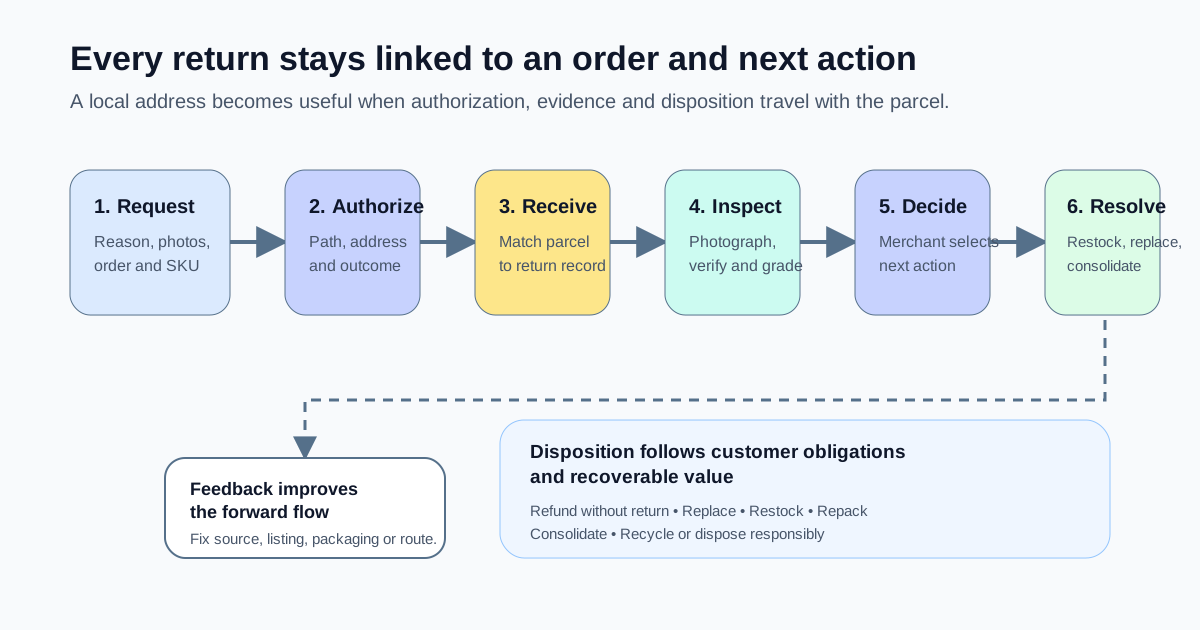
Ecommerce returns management is the operating system that connects a customer request to authorization, shipping or local receiving, inspection, refund evidence and the product's next destination.
A return portal can collect the request, but value is recovered only when the physical item and digital order remain linked through a clear decision workflow.

Section 1
Separate defect, wrong item, transit damage, non-delivery, remorse and exchange. Each reason can require different evidence, shipping responsibility and disposition. Create value and risk thresholds so support knows when to refund without physical return, replace, issue a label or request local receiving. Apply the customer policy and local law before the cheapest warehouse preference. If this needs to become a real operating process, map the order-linked returns workflow with ProveedorPro.
Section 2
Create a return authorization or record containing order, SKU, variant, reason, evidence, promised resolution and expected parcel. The receiving operator should not guess which merchant or order owns an unlabelled box. A simple order-linked button in the merchant workflow can create the record before the customer ships. For the next part of the decision, review Ecommerce returns management in the USA: process, service and control.
Section 3
At arrival, record date, parcel condition, item identity and evidence. Use repeatable grades such as unopened, resellable after repack, repair/rework, consolidate or dispose. Product-specific safety and hygiene rules may limit resale. The merchant should receive enough evidence to approve the promised refund and next action without a video call to a mystery shelf.
Section 4
Compare local resale, restock, refurbishment, parts recovery, consolidation to another warehouse, donation/recycling where appropriate and disposal. Include handling, storage and outbound cost. A $12 item should not accumulate $18 of inspection and forwarding because the workflow lacks a stop rule. This also connects directly to Dropshipping returns: decide what should happen to each order.
Section 5
Track reason by SKU and source, approval time, return transit, receive-to-grade time, recovery value, disposal cost and repeat contact. Use the data to change packaging, descriptions, size guidance, supplier specifications or sourcing. Returns management should reduce future returns, not merely organize them. When the receiving scope and destination are clear, request a returns-pilot review.
Section 6
A recurring defect should reach the product and supplier record. A recovered item should re-enter stock only after approval. ProveedorPro's returns concept connects local operators and order-linked records with China sourcing and fulfillment, creating an entry point for merchants who first need reverse logistics and later need a stronger forward supply chain.
Run this final operating check with the exact SKU and destination. A supplier badge or successful app connection does not replace product-level verification.
Verify current platform, trade, consumer or quality requirements before making a customer promise. Product and destination rules can change.
It is the coordinated policy, software record and physical workflow for authorizing, receiving, inspecting, refunding and disposing of returned ecommerce products.
Not necessarily. A trained local receiver can handle early volume if order linking, evidence, storage limits and disposition instructions are clear.
It is the decision for what happens next: restock, repack, repair, consolidate, resell, recycle, donate where appropriate or dispose.
Reason and inspection data can reveal product, packaging, description or supplier problems and guide corrective sourcing decisions.
Share the destination, expected parcel volume and product types so the receiving, evidence, storage and disposition workflow can be reviewed together.