Shopify fulfillment from China to Singapore: evaluate Shopify order intake before you commit
Shopify fulfillment from China to Singapore starts with one exact product, a Singapore destination and a documented operating plan.
Compare Shopify order intake, SKU synchronization, tracking write-back before publishing a customer promise.
ProveedorPro coordinates supported China-side sourcing and fulfilment; the seller remains responsible for applicable Singapore GST, import, product-safety and customer obligations.
A Singapore-focused decision map connecting product evidence, China-side operations, GST and import checks, fulfilment and a quote-ready next step.ProveedorPro workflow evidence: A product-specific quote connects the search intent to an exact SKU, destination, cost and operating route.
First-party evidence selected for this buyer job
What the operation can show before you commit
These ProveedorPro-owned assets are mapped to this page because they support its specific decision. They show observable workflow evidence; they do not guarantee a future supplier, cost, quality result, customs outcome or delivery time.
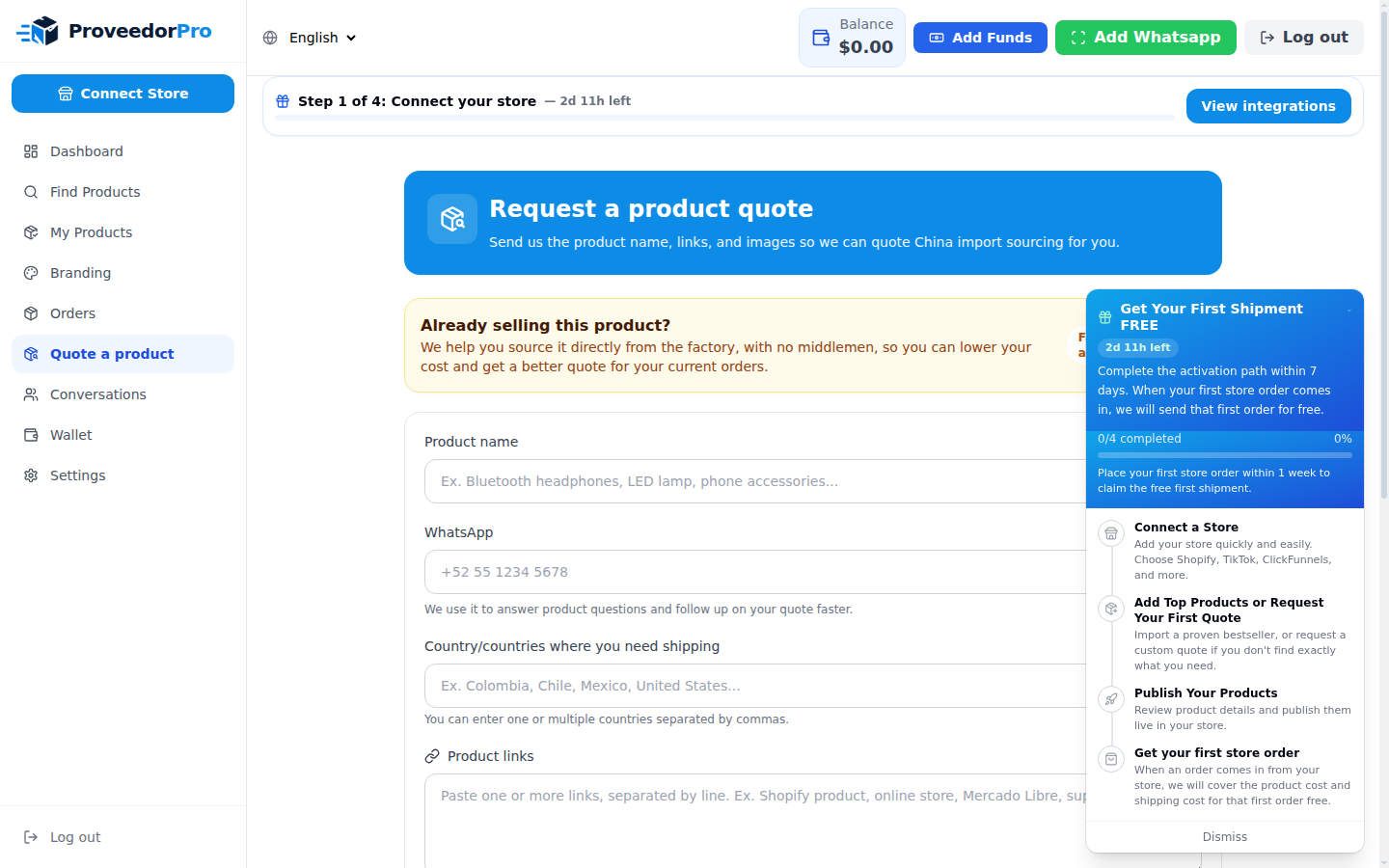
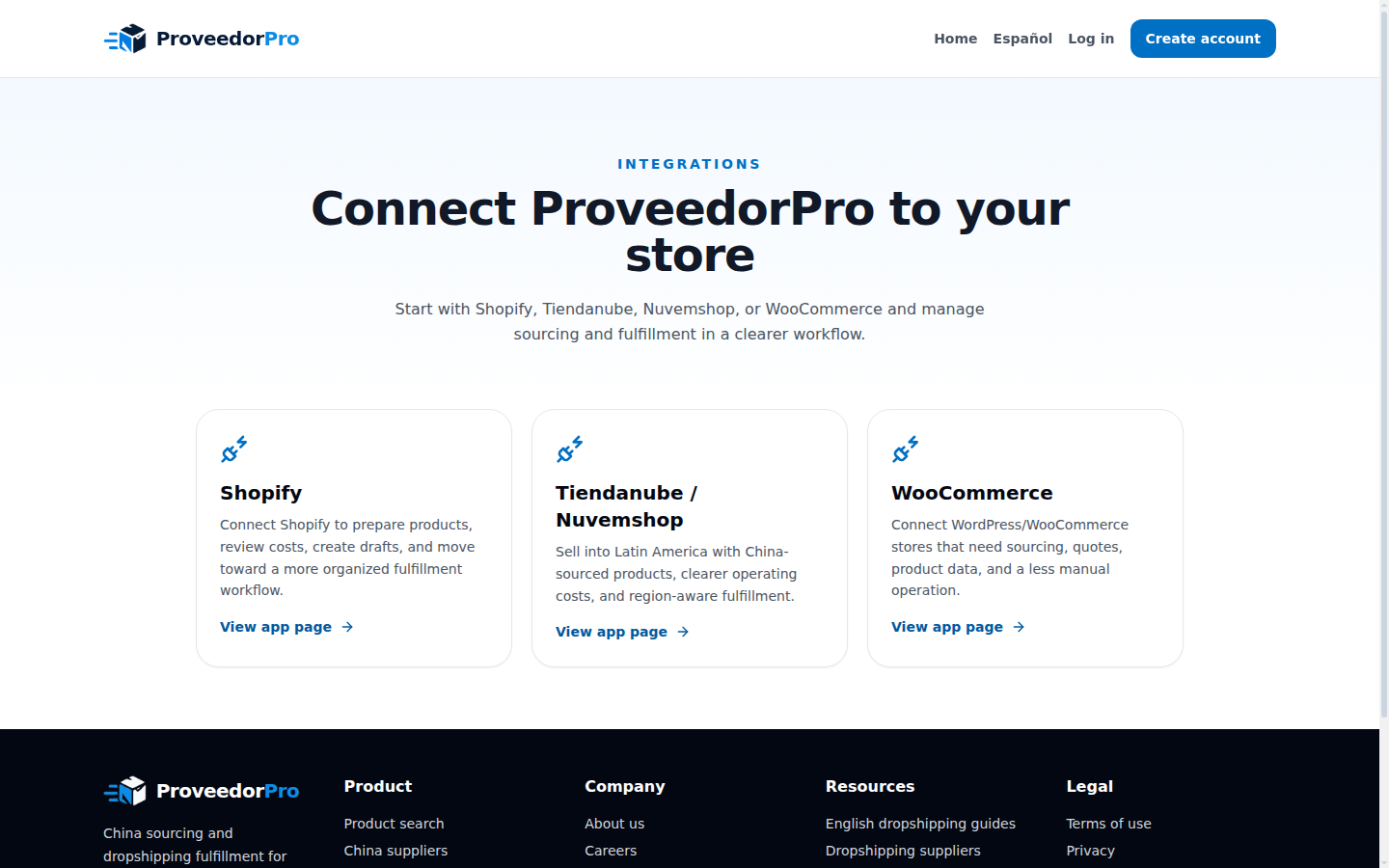
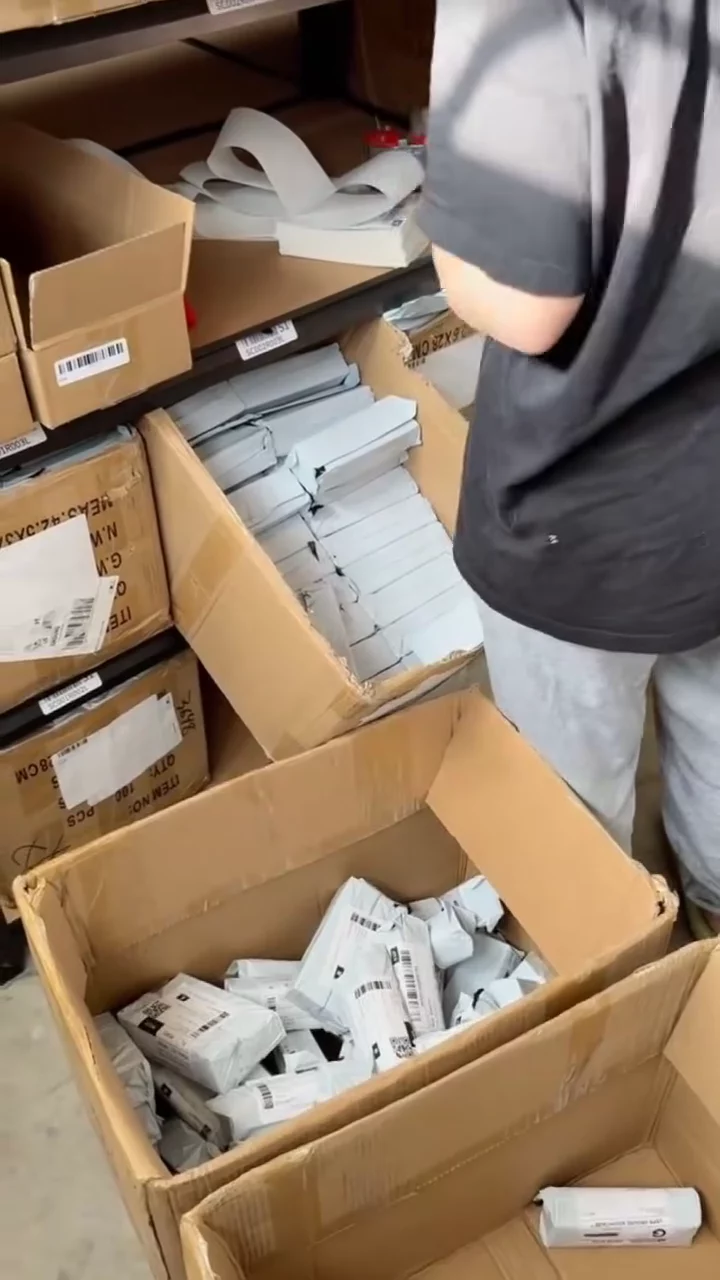
ProveedorPro integrations view. the English integrations view used to connect store and order workflows. It supports the Shopify order intake decision for this page; it is operational evidence, not a delivery, cost or quality guarantee. ProveedorPro-owned first-party asset.Dispatch preparation evidence. completed parcels prepared for outbound dispatch. It supports the SKU synchronization decision for this page; it is operational evidence, not a delivery, cost or quality guarantee. ProveedorPro-owned first-party asset.
ProveedorPro operational evidence
Order intake, packing and labeling
New orders move into packing and labeling as part of the fulfillment handoff. This is ProveedorPro-owned footage selected from the canonical operational video library for this specific workflow.
Decision supported: The store-order-to-warehouse handoff.
First-hand evidence mini-case
Evidence mini-case: a store-order-to-warehouse handoff
Input: Buyer job: Commission product sourcing for a Singapore Shopify store. The evidence was selected to test Shopify product sourcing, not to stand in for a Singapore-specific quote or delivery record.
Observed: What the owned asset shows: orders entering packing and labelling after the digital intake step.
Decision: Decision supported for Shopify fulfillment from China to Singapore: test SKU mapping, address data, status updates and tracking return with a controlled order.
Still to verify: What remains unproven until a live product is reviewed: platform permissions, seller-specific automation, exception handling and Singapore delivery performance.
A reviewed still from the same ProveedorPro-owned operation, placed here because it visibly supports this page's fulfillment decision.
Section 1
Shopify fulfillment from China to Singapore: the direct answer
Shopify fulfillment from China to Singapore starts with one exact product, a Singapore destination and a documented operating plan. Compare Shopify order intake, SKU synchronization, tracking write-back before publishing a customer promise. ProveedorPro coordinates supported China-side sourcing and fulfilment; the seller remains responsible for applicable Singapore GST, import, product-safety and customer obligations. To connect this requirement to a real store workflow, review ProveedorPro’s integration path.
Buyer job: Select and start a paid Shopify fulfillment from China to Singapore workflow for a Singapore ecommerce business.
Decision boundary: Merging with china-3pl-ecommerce would remove this buyer job's distinct provider-selection criteria, proof requirement and conversion handoff.
Start with a product URL or specification, exact variant, quantity, destination postal code and required evidence.
Build the Shopify order intake review around a decision ledger for Shopify fulfillment from China to Singapore. One column records the seller's requirement, one records the operator or supplier response, and one links the dated proof. Add an expiry or recheck trigger wherever the answer can change. The ledger is ready only when it provides a clear Shopify order intake pass/hold record with an accountable owner; unanswered items stay visible instead of being absorbed into a headline quote. For the next part of the decision, review dropshipping suppliers Singapore: evaluate supplier model fit before you commit.
Evidence needed: dated proof for the exact variant and stated scope.
Decision owner: the person allowed to approve or stop the next step.
Failure test: the condition that triggers a hold or corrective action.
Audit SKU synchronization from the customer promise backwards. Start with what the Singapore buyer will see, then trace the inventory, packing, product and supplier records needed to support it. Assign a named response for the most likely failure at each step. The Shopify fulfillment from China to Singapore option passes this audit when it produces a clear SKU synchronization pass/hold record with an accountable owner and the promise can be defended without relying on an undated message.
Commercial boundary: included and excluded work shown separately.
Comparison basis: the same SKU, quantity, packing and destination.
Review trigger: any material product, supplier, route or platform change.
The fastest way to evaluate tracking write-back is to ask for evidence tied to one sellable variant. Capture measurements, photos, commercial terms and ownership of the next handoff, then compare them with the customer promise planned for Singapore. If a claim cannot be observed or dated, mark it unknown. The decision record should end with a clear tracking write-back pass/hold record with an accountable owner, not a vague statement that the option “looks good.” This also connects directly to dropshipping fulfillment from China to Singapore: evaluate inventory receipt before you commit.
Handoff input: the record the next operator must receive.
Exception path: owner, response and customer remedy.
Scale proof: a successful test order or evidence review before volume increases.
This page is scoped to the paid buyer job “Select and start a paid Shopify fulfillment from China to Singapore workflow for a Singapore ecommerce business.” and the platform-integration format observed in the Singapore research package completed on 1 October 2026. It uses Singapore Customs and IRAS as primary references for import and GST context. Competitor structures informed the questions and decision modules, but their wording was not copied. Product, supplier, route and tax outcomes remain dependent on the live SKU and transaction. Once the product and platform requirements are defined, request a product-specific quote.
Primary owner: Shopify fulfillment from China to Singapore.
Closest competing owner: china-3pl-ecommerce.
Proof required before conversion: SKU brief, supplier comparison, quote and test-order evidence.
Bind the sourced product to the correct Shopify variant
Shopify product sourcing is complete only when the approved physical item maps to the sellable store variant. Record the Shopify product and variant identifiers beside supplier SKU, option names, package contents, imagery, cost basis and fulfillment method. Avoid a loose title-only match: two variants can look similar in the admin while requiring different colours, plugs, dimensions or inserts. The mapping record should survive theme changes and product-page rewrites, because fulfillment depends on the identifier and approved specification rather than the latest marketing title. The page-specific checkpoint in this section is Shopify order intake; record its owner and dated proof before advancing. For the operational handoff, continue with China 3PL for Singapore ecommerce: evaluate 3PL scope before you commit.
Map each Shopify variant to one approved supplier SKU.
Keep customer-facing options aligned with purchase attributes.
Attach the approved cost and package record to that mapping.
Block fulfillment when an incoming variant has no valid source.
Before publishing or increasing spend for the fulfilment operation, confirm that the product page, Shopify product sourcing record and fulfilment plan describe the same item. Check variant naming, package contents, dimensions, instructions, warnings, inventory method, processing time, tracking event, delivery range and customer remedy path. Save the approved evidence and assign a backup plan for a source, route or operational failure. This checklist is deliberately operational: traffic cannot rescue a product whose physical workflow is still a group chat and a hopeful emoji. The page-specific checkpoint in this section is tracking write-back; record its owner and dated proof before advancing.
Exact SKU and specification approved.
Supplier, sample and quality evidence stored.
SGD landed-cost scenario reviewed.
Singapore Customs and IRAS import and GST guidance, Singapore consumer-protection authorities and Singapore product-safety questions checked with authoritative guidance.
Test order and exception path completed.
Store claims, delivery range and support policy aligned.
variant architecture: decision criteria for Singapore sellers
Treat variant architecture as a separate approval gate inside the fulfilment operation. Keep variant architecture discovery separate from approval by naming the exact item and the conditions it must satisfy. A clean variant architecture dashboard is useful only when the physical SKU and parcel events remain connected to it. Ask the operator to demonstrate brief, supplier options, sample, content inputs, inventory method and fulfilment test with a current product or order record. Model variant architecture using one normal order and one exception instead of relying on an ideal average. Variant architecture coordination in China does not transfer the Singapore store's legal and customer-facing responsibilities. When variant architecture proof is missing, reduce the commitment and run a sample or controlled order. The seller should be able to explain the decision, its limitations and the trigger for reviewing it again. This checkpoint focuses on what the seller should decide before money or inventory moves. The page-specific checkpoint in this section is Shopify order intake; record its owner and dated proof before advancing. Before the final decision, compare WooCommerce fulfillment from China to Singapore: evaluate WooCommerce order intake before you commit.
Decision: define the pass, hold and escalation rule for variant architecture.
Proof: attach dated evidence to the selected product variant and destination within Singapore scenario.
Owner: name who performs the check, approves the decision and owns corrective action.
Scale gate: repeat the check after a material supplier, packaging, route or platform change.
Run this final operating check with the exact SKU and destination. A supplier badge or successful app connection does not replace product-level verification.
Approve the exact variant, specification, package contents and product evidence.
Calculate landed cost with packing, fulfillment, route, fees, acquisition and expected exceptions.
Test a sample or low-risk live order through the destination customers will actually use.
Confirm inventory, processing, tracking, cancellation, defect and replacement procedures.
Align the product page, delivery range and return language with the tested workflow.
Document the approved source and keep a qualified backup for any critical SKU.
Authoritative resources
Verify current platform, trade, consumer or quality requirements before making a customer promise. Product and destination rules can change.
How should a Singapore seller evaluate Shopify fulfillment from China to Singapore?
Start with one exact product and compare Shopify order intake, SKU synchronization, tracking write-back on the same scope. Keep every price, sample, inspection and route assumption dated.
Does ProveedorPro guarantee delivery times for Shopify fulfillment from China to Singapore?
No. Delivery depends on the product, packed parcel, current route, customs and last-mile handoff. A live quote should state its assumptions and validity date.
How should GST be handled for orders sent to Singapore?
Singapore GST treatment depends on the transaction, seller or marketplace registration, item value and import route. Check current IRAS and Singapore Customs guidance for the actual order.
What evidence should be collected before scaling Shopify fulfillment from China to Singapore?
Keep the approved specification, supplier comparison, sample or inspection evidence, packing details, route quote, tracking test and exception owner together.
What is the next step with ProveedorPro?
Submit the product link or specification, exact variant and Singapore destination. ProveedorPro can scope the supported China-side sourcing, evidence and fulfilment work.
Build a platform workflow for Singapore around one real product
Bring the product link and destination so the supplier, integration, fulfillment and landed-cost assumptions can be reviewed together.