Shopify dropshipping suppliers New Zealand: a practical sourcing and fulfilment guide
Shopify dropshipping suppliers New Zealand starts with one exact product, a New Zealand destination and a documented operating plan.
Compare the source, evidence, packaging, fulfilment, route and exception owner before promising customers anything.
ProveedorPro coordinates the China-side workflow; the seller remains responsible for applicable New Zealand tax, consumer, product and biosecurity obligations.
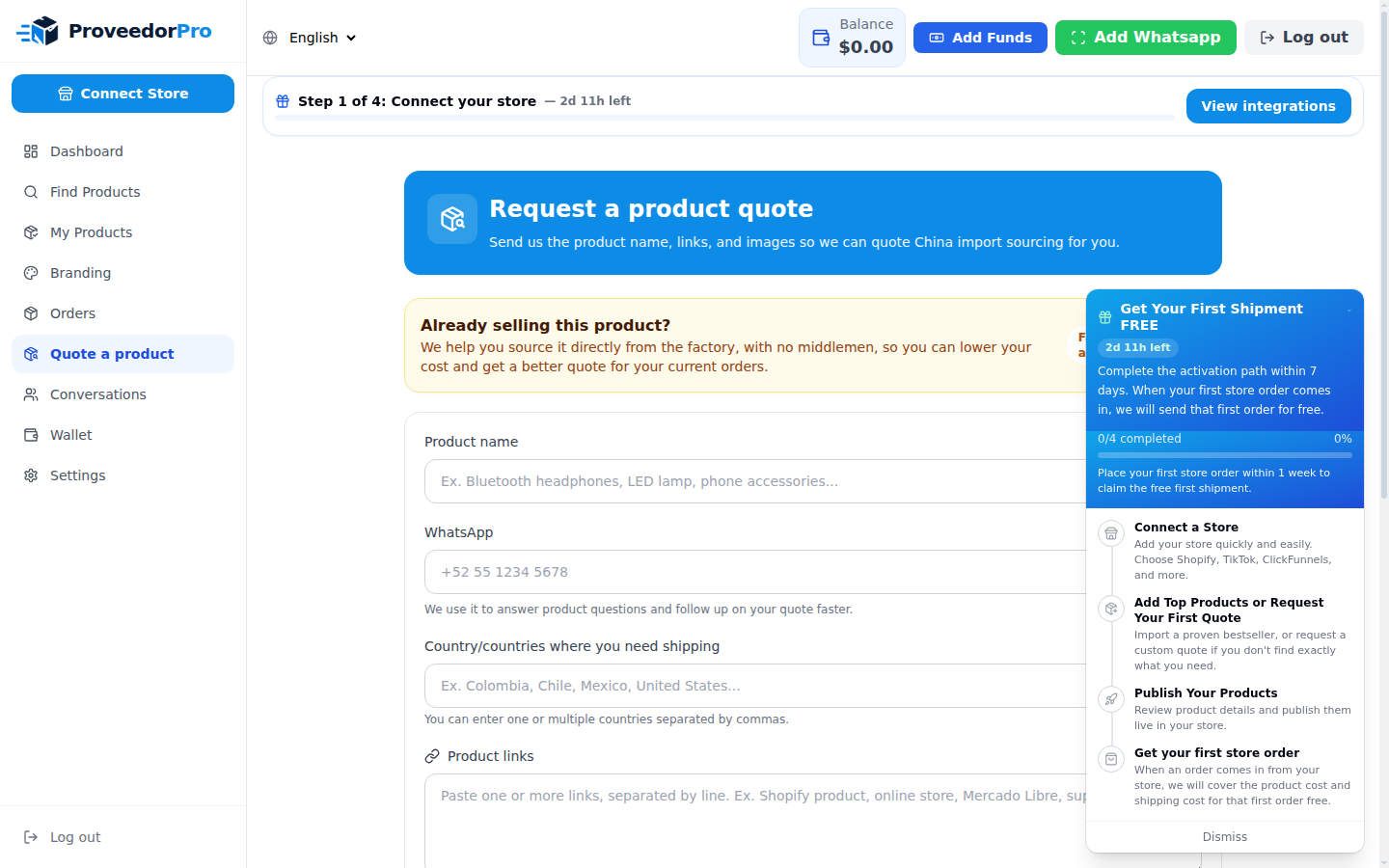
A New Zealand-focused decision map connecting product evidence, fulfilment, border checks and the customer promise.ProveedorPro workflow evidence: A product-specific quote connects the search intent to an exact SKU, destination, cost and operating route.
ProveedorPro operational evidence
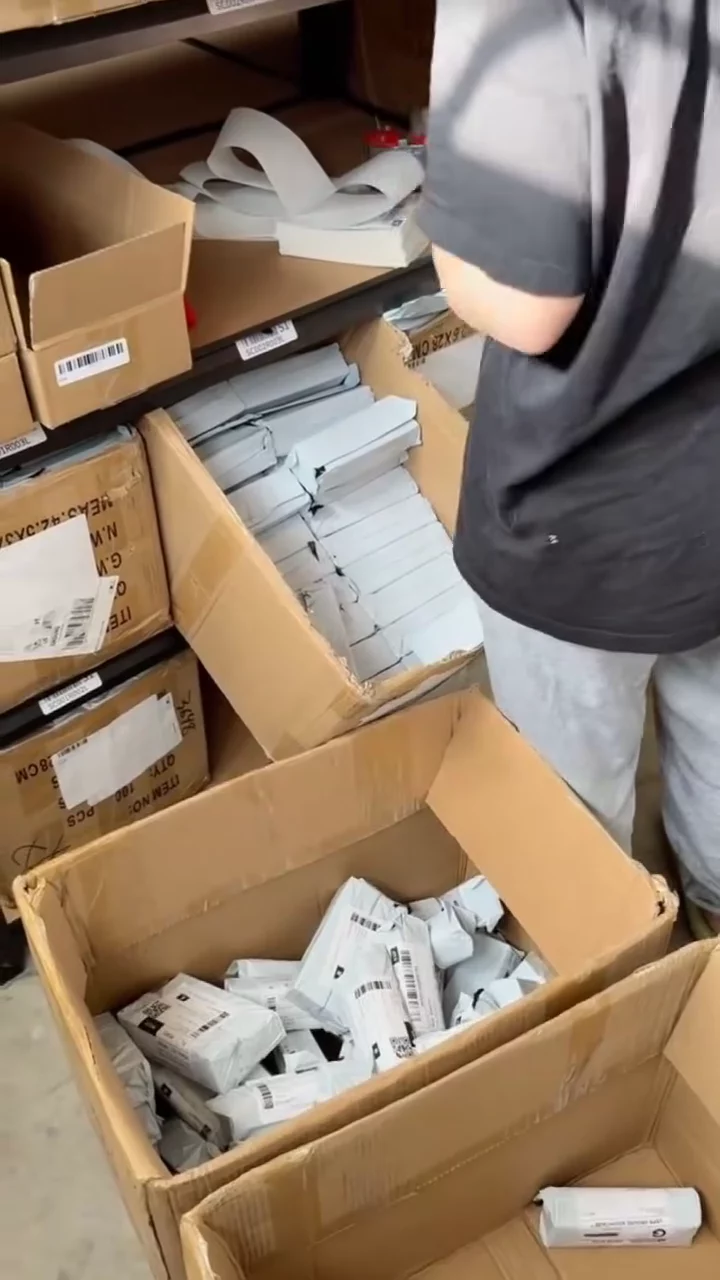
Order intake, packing and labeling
New orders move into packing and labeling as part of the fulfillment handoff. This is ProveedorPro-owned footage selected from the canonical operational video library for this specific workflow.
A reviewed still from the same ProveedorPro-owned operation, placed here because it visibly supports this page's fulfillment decision.
Free New Zealand planning resource
NZ supplier evidence checklist
Capture the exact SKU, supplier, sample, inspection, packaging, route and approval owner before committing. It is a planning aid, not tax, customs or legal advice.
Shopify dropshipping suppliers New Zealand: the direct answer
Shopify dropshipping suppliers New Zealand is best approached as a documented commercial operating choice, not a promise that one supplier, marketplace or app will suit every store. For a store selling into Aotearoa New Zealand, the useful starting point is a single sellable item, the destination postcode, selling channel, expected order pattern and the evidence needed before accepting the product. ProveedorPro can coordinate the China-side work around Shopify supplier operations, while the seller keeps responsibility for New Zealand tax, consumer, product and biosecurity obligations. That division matters: outsourcing sourcing work does not outsource the promises made to customers. To connect this requirement to a real store workflow, review ProveedorPro’s integration path.
Buyer job: Choose a supplier workflow for a New Zealand Shopify store.
Primary decision: verify the physical workflow behind the app connection before committing more demand the catalogue.
Starting inputs: product URL or specification, variant, quantity, destination postcode and required evidence.
How the New Zealand buyer should evaluate Shopify supplier operations
The ranking pages for this query consistently reward practical service or comparison coverage, so this page follows that intent with a store-to-supplier handoff map, an operating workflow and clear decision criteria. Evaluate whether the proposed model can show who performs each step, which evidence is created, when the seller approves a decision and what happens when the product or parcel falls outside the plan. A polished catalogue is useful for discovery, but it is not proof of the specific sellable item, stock condition, packed dimensions or route. The unglamorous handoffs are where margin usually goes to hide. For the next part of the decision, review dropshipping suppliers New Zealand: a practical sourcing and fulfilment guide.
Ask for evidence tied to the exact variant, not only a representative listing.
Map product mapping, order intake, fulfilment status and tracking return.
Name the owner of delays, defects, substitutions, cancellations and tracking exceptions.
Run a small operational test before adding catalogue or ad volume paid acquisition.
For Shopify dropshipping suppliers New Zealand, a useful commercial comparison starts with a shared comparison baseline. Record the product and packaging cost, China-side handling, inspection or sample work, measured shipment profile, fulfilment charge, transport, payment fees and an allowance for exceptions. Convert the planning view into NZD, but keep the source currency and exchange-rate date so later quotes remain comparable. Do not turn an illustrative calculation into a tax or delivery promise. New Zealand Customs explains that GST and duty treatment depends on the goods and consignment, while Inland Revenue has separate rules for low-value imported goods and overseas sellers.
Use one approved SKU and package specification across every quote.
Separate product cost, operational fees and route cost.
Record whether GST is collected at sale, border or through another applicable arrangement.
Recheck margins after refunds, replacements, payment fees and ad spend.
The working process for Shopify dropshipping suppliers New Zealand
The working process for Shopify dropshipping suppliers New Zealand starts with a documented product request, then turns Shopify supplier operations into observable checkpoints. Confirm the exact product, shortlist the appropriate source or operating model, collect recent supporting records, approve a sample or specification, confirm packaging and measure the packed parcel. Only then should the team lock the fulfilment and New Zealand route. For platforms work, the decisive proof is not a generic assurance; it is a record that connects the approved SKU to receiving, handling, dispatch and the customer-facing tracking event. This also connects directly to AliExpress dropshipping alternative New Zealand: a practical sourcing and fulfilment guide.
1. Define the exact product and acceptance criteria.
2. Compare source or service options on one scope.
3. Approve samples, evidence and packaging.
4. Test the physical and digital order handoff.
5. Document the route, exceptions and delivery and support promise.
New Zealand import and biosecurity checks belong before launch
Shopify dropshipping suppliers New Zealand still depends on the exact product entering New Zealand; “the carrier accepted it” is not the same as “the product is cleared and commercially ready.” MPI import health standards can apply to plant, animal, food, biological and other risk goods, and all commercial imports require Customs clearance. Check the category, material, treatment, documentation and importer responsibilities before the product page goes live. If the product is unusual, regulated or biosecurity-sensitive, obtain qualified advice. ProveedorPro can help collect evidence for Shopify supplier operations, but does not replace Customs, MPI, tax or legal advice. Once the product and platform requirements are defined, request a product-specific quote.
Check MPI requirements for the exact materials and intended use.
Confirm Customs classification, valuation and importer details.
Keep supplier declarations and approval documentation with the SKU record.
Do not advertise a delivery date until the route and clearance assumptions are tested.
For Shopify dropshipping suppliers New Zealand, the store still owns the promise made to its New Zealand customer. The Consumer Guarantees Act can apply to goods sold by businesses to people in New Zealand, including online sales for personal or household use. That makes evidence about product mapping, order intake, fulfilment status and tracking return part of the decision, not an afterthought for support. Define how a defect is documented, who reviews it, when a replacement or refund is approved and what happens to the physical item. The operating agreement should support the store promise; it should not force the customer to discover the supply chain during a complaint. For the operational handoff, continue with CJdropshipping alternative New Zealand: a practical sourcing and fulfilment guide.
Write product claims from verified specifications and test evidence.
Keep order, batch, inspection and tracking records connected.
Define replacement, refund and supplier-recovery procedures.
Use customer-facing delivery and return language the tested route can support.
Evidence that matters for Shopify supplier operations
Evidence for Shopify dropshipping suppliers New Zealand should answer whether Shopify supplier operations is real, repeatable and suitable for the NZ delivery scenario. Request current product photos or video where relevant, supplier identity information, a written quotation, sample or inspection results, packaging confirmation and a test-order record. Evidence should be versioned and connected to the specific SKU. For this buyer job—choose a supplier workflow for a new zealand shopify store.—screenshots can support a decision, but they should not be mistaken for warranties, certifications or independent endorsements unless that is what they genuinely are.
Use a store-to-supplier handoff map to compare the options.
Verify product mapping, order intake, fulfilment status and tracking return.
Record open questions, responsible person and deadline.
Hold payment, production or scale decisions when a necessary approval artifact is missing.
Shopify dropshipping suppliers New Zealand fits a seller whose goal is to verify the physical workflow behind the app connection before adding catalogue or ad volume the catalogue. It is particularly useful when evidence about product mapping, order intake, fulfilment status and tracking return affects conversion, margin or retention. It may be unnecessary for a very early research idea with no validated product, and it may be the wrong route when the category requires capabilities, certification or local infrastructure that have not been confirmed. Use a store-to-supplier handoff map to make the boundary visible. The right answer is a scoped pilot, not forced certainty. Before the final decision, compare WooCommerce dropshipping suppliers New Zealand: a practical sourcing and fulfilment guide.
Good fit: a defined SKU, real customer market and willingness to test.
Needs more research: vague product, unknown materials or unsupported claims.
Hold: prohibited product, missing critical documentation or no viable route.
Scale only after the evidence and order workflow survive a real pilot.
Before publishing or increasing spend for Shopify dropshipping suppliers New Zealand, confirm that the product page, Shopify supplier operations record and fulfilment plan describe the same item. Check variant naming, package contents, dimensions, instructions, warnings, inventory method, processing time, tracking event, delivery range and customer remedy path. Save the approved evidence and assign a backup plan for a source, route or operational failure. This checklist is deliberately operational: traffic cannot rescue a product whose physical workflow is still a group chat and a hopeful emoji.
Exact SKU and specification approved.
Supplier, sample and quality evidence stored.
NZD landed-cost scenario reviewed.
Customs, GST and MPI questions checked with authoritative guidance.
Test order and exception path completed.
Store claims, delivery range and support policy aligned.
product mapping: decision criteria for New Zealand sellers
For this buyer job, product mapping deserves more than a line in a supplier chat. Fix the product mapping comparison scope first: item, materials, quantity, packaging, destination and evidence date. A product mapping document can support identity or scope, yet capability and exact-product fit still need separate evidence. Record how product mapping, order intake, fulfilment status and tracking return change when a substitution, defect, cancellation or delayed parcel appears. Compare product mapping product, service, packaging and route charges separately so a cheap unit price cannot hide missing work. Product mapping does not remove the seller's need to check Customs, GST, MPI and consumer obligations for the actual product. Preserve a product mapping fallback wherever one failure could stop fulfillment. This is how a store-to-supplier handoff map becomes an operating tool rather than another attractive diagram. This checkpoint focuses on what the seller should decide before money or inventory moves.
Decision: define the pass, hold and escalation rule for product mapping.
Proof: attach dated evidence to the specific sellable item and target NZ delivery area scenario.
Owner: name who performs the check, approves the decision and owns corrective action.
Scale gate: repeat the check after a material supplier, packaging, route or platform change.
order handoff: evidence standard for New Zealand sellers
Treat order handoff as a separate approval gate inside Shopify dropshipping suppliers New Zealand. Keep order handoff discovery separate from approval by naming the exact item and the conditions it must satisfy. A clean order handoff dashboard is useful only when the physical SKU and parcel events remain connected to it. Ask the operator to demonstrate product mapping, order intake, fulfilment status and tracking return with a current product or order record. Model order handoff using one normal order and one exception instead of relying on an ideal average. Order handoff coordination in China does not transfer the New Zealand store's legal and customer-facing responsibilities. When order handoff proof is missing, reduce the commitment and run a sample or controlled order. The seller should be able to explain the decision, its limitations and the trigger for reviewing it again. This checkpoint focuses on what dated, SKU-specific proof should be retained.
Decision: define the pass, hold and escalation rule for order handoff.
Proof: attach dated evidence to the item-level specification and NZ delivery scenario scenario.
Owner: name who performs the check, approves the decision and owns corrective action.
Scale gate: repeat the check after a material supplier, packaging, route or platform change.
tracking return: commercial model for New Zealand sellers
A New Zealand ecommerce business can make Shopify dropshipping suppliers New Zealand more concrete by isolating tracking return. For tracking return, write down the product, exact variant, NZ postcode and expected weekly order pattern before comparing options. Tracking return photos help verify visible characteristics, while measurements, function and repeatability require their own checks. Separate the physical steps in product mapping, order intake, fulfilment status and tracking return from software notifications and marketplace promises. Recalculate the tracking return margin after payment fees, replacements, support time and likely advertising cost. If tracking return materials or intended use create biosecurity or product-safety questions, resolve them before advertising. A failed tracking return checkpoint should create a hold, corrective action or different option—not a softer promise. The output is a dated pass-or-hold decision that another team member can understand without reconstructing a chat. This checkpoint focuses on how to compare costs and responsibilities on a normalized scope.
Decision: define the pass, hold and escalation rule for tracking return.
Proof: attach dated evidence to the selected product variant and destination within New Zealand scenario.
Owner: name who performs the check, approves the decision and owns corrective action.
Scale gate: repeat the check after a material supplier, packaging, route or platform change.
manual fallback: pilot design for New Zealand sellers
The commercial value of Shopify dropshipping suppliers New Zealand becomes clearer when manual fallback has its own record. Anchor the manual fallback review to one SKU, its package contents, the destination and a realistic order scenario. A manual fallback listing screenshot may confirm discovery, but it cannot prove repeat stock, packed weight or the next available route. Make product mapping, order intake, fulfilment status and tracking return auditable through timestamps, evidence files and an escalation owner. Require the manual fallback quote to state what expires, what can change and which activities are outside scope. Manual fallback border treatment depends on the goods and consignment, so the plan should not promise a fixed outcome. Approve the next manual fallback step only when the artifact, owner and acceptance rule agree. Done properly, this checkpoint leaves evidence, a responsible team member and the next action in one place. This checkpoint focuses on how to test the workflow without exposing the full store.
Decision: define the pass, hold and escalation rule for manual fallback.
Proof: attach dated evidence to the approved variant and New Zealand postcode scenario scenario.
Owner: name who performs the check, approves the decision and owns corrective action.
Scale gate: repeat the check after a material supplier, packaging, route or platform change.
product mapping: operating record for New Zealand sellers
Before committing to Shopify dropshipping suppliers New Zealand, test the assumptions hidden inside product mapping. Use one product mapping brief so every source is answering the same specification and target NZ delivery area. Current product mapping footage can demonstrate a physical step without guaranteeing that every future order will perform identically. Map product mapping, order intake, fulfilment status and tracking return and identify the person responsible at every handoff. Use product mapping landed-cost ranges until the packed parcel and available transport option are confirmed. Product mapping store policies should reflect the tested route and the remedies owed to New Zealand customers. Use a small product mapping pilot to expose handoff problems before catalogue expansion or paid traffic magnifies them. That record makes what should remain attached to the SKU and order history visible before the seller accepts avoidable risk. This checkpoint focuses on what should remain attached to the SKU and order history.
Decision: define the pass, hold and escalation rule for product mapping.
Proof: attach dated evidence to the specific sellable item and target NZ delivery area scenario.
Owner: name who performs the check, approves the decision and owns corrective action.
Scale gate: repeat the check after a material supplier, packaging, route or platform change.
Order handoff is a checkpoint where a broad Shopify dropshipping suppliers New Zealand promise becomes a decision that can be checked. Start the order handoff decision from the customer-facing variant and work backwards through packing, source and route requirements. An order handoff quotation shows an offer at a point in time; it does not replace a sample, inspection result or dispatch test. Follow product mapping, order intake, fulfilment status and tracking return from the first approval to the event visible to the customer. For order handoff, keep the source currency beside every NZD planning figure and date the exchange rate. Order handoff regulatory questions belong in the product record, not in a last-minute message after the parcel moves. Set an order handoff review date because supplier terms, routes and platform behaviour can change after approval. The aim is practical control: enough verified information to verify the physical workflow behind the app connection before increasing catalogue volume. This checkpoint focuses on what must remain stable before increasing catalogue size or ad spend.
Decision: define the pass, hold and escalation rule for order handoff.
Proof: attach dated evidence to the item-level specification and NZ delivery scenario scenario.
Owner: name who performs the check, approves the decision and owns corrective action.
Scale gate: repeat the check after a material supplier, packaging, route or platform change.
tracking return: New Zealand handoff for New Zealand sellers
For this buyer job, tracking return deserves more than a line in a supplier chat. Fix the tracking return comparison scope first: item, materials, quantity, packaging, destination and evidence date. A tracking return document can support identity or scope, yet capability and exact-product fit still need separate evidence. Record how product mapping, order intake, fulfilment status and tracking return change when a substitution, defect, cancellation or delayed parcel appears. Compare tracking return product, service, packaging and route charges separately so a cheap unit price cannot hide missing work. Tracking return does not remove the seller's need to check Customs, GST, MPI and consumer obligations for the actual product. Preserve a tracking return fallback wherever one failure could stop fulfillment. This is how a store-to-supplier handoff map becomes an operating tool rather than another attractive diagram. This checkpoint focuses on where China-side work ends and the NZ seller responsibility begins.
Decision: define the pass, hold and escalation rule for tracking return.
Proof: attach dated evidence to the selected product variant and destination within New Zealand scenario.
Owner: name who performs the check, approves the decision and owns corrective action.
Scale gate: repeat the check after a material supplier, packaging, route or platform change.
manual fallback: customer promise for New Zealand sellers
Treat manual fallback as a separate approval gate inside Shopify dropshipping suppliers New Zealand. Keep manual fallback discovery separate from approval by naming the exact item and the conditions it must satisfy. A clean manual fallback dashboard is useful only when the physical SKU and parcel events remain connected to it. Ask the operator to demonstrate product mapping, order intake, fulfilment status and tracking return with a current product or order record. Model manual fallback using one normal order and one exception instead of relying on an ideal average. Manual fallback coordination in China does not transfer the New Zealand store's legal and customer-facing responsibilities. When manual fallback proof is missing, reduce the commitment and run a sample or controlled order. The seller should be able to explain the decision, its limitations and the trigger for reviewing it again. This checkpoint focuses on how the physical workflow constrains store claims and support.
Decision: define the pass, hold and escalation rule for manual fallback.
Proof: attach dated evidence to the approved variant and New Zealand postcode scenario scenario.
Owner: name who performs the check, approves the decision and owns corrective action.
Scale gate: repeat the check after a material supplier, packaging, route or platform change.
product mapping: team responsibility for New Zealand sellers
A NZ store operator can make Shopify dropshipping suppliers New Zealand more concrete by isolating product mapping. For product mapping, write down the product, exact variant, NZ postcode and expected weekly order pattern before comparing options. Product mapping photos help verify visible characteristics, while measurements, function and repeatability require their own checks. Separate the physical steps in product mapping, order intake, fulfilment status and tracking return from software notifications and marketplace promises. Recalculate the product mapping margin after payment fees, replacements, support time and likely advertising cost. If product mapping materials or intended use create biosecurity or product-safety questions, resolve them before advertising. A failed product mapping checkpoint should create a hold, corrective action or different option—not a softer promise. The output is a dated pass-or-hold decision that another team member can understand without reconstructing a chat. This checkpoint focuses on who approves, performs, verifies and escalates each handoff.
Decision: define the pass, hold and escalation rule for product mapping.
Proof: attach dated evidence to the specific sellable item and target NZ delivery area scenario.
Owner: name who performs the check, approves the decision and owns corrective action.
Scale gate: repeat the check after a material supplier, packaging, route or platform change.
Run this final operating check with the exact SKU and destination. A supplier badge or successful app connection does not replace product-level verification.
Approve the exact variant, specification, package contents and product evidence.
Calculate landed cost with packing, fulfillment, route, fees, acquisition and expected exceptions.
Test a sample or low-risk live order through the destination customers will actually use.
Confirm inventory, processing, tracking, cancellation, defect and replacement procedures.
Align the product page, delivery range and return language with the tested workflow.
Document the approved source and keep a qualified backup for any critical SKU.
Authoritative resources
Verify current platform, trade, consumer or quality requirements before making a customer promise. Product and destination rules can change.
Source links and factual boundaries last reviewed: 27 September 2026. These links are evidence boundaries, not personalised tax, customs, biosecurity or legal advice.
What should I verify before using Shopify dropshipping suppliers New Zealand?
Verify the selected product variant, supplier or service scope, dated product records, packed dimensions, New Zealand route, tracking handoff and exception owner. Check Customs, GST, product and MPI requirements for the actual category before making published store commitments.
Can ProveedorPro guarantee delivery times to New Zealand?
No fixed delivery time should be guaranteed without the exact product, origin, packing, destination and available route. ProveedorPro can help review and test the route, while carrier performance and border clearance remain variable.
How should I compare costs for Shopify supplier operations?
Use the same SKU, package and destination. Compare product cost, China-side work, inspection, packaging, fulfilment, transport, payment fees, expected exceptions and the applicable GST or import treatment in NZD.
Do I need to consider New Zealand biosecurity rules?
Yes, when the product or packaging may contain risk materials or falls within an MPI-controlled category. Check the exact commodity and import health requirements before ordering or advertising it.
Should I order a sample before selling?
A sample-led validation run is strongly recommended when quality, size, material, function, packaging or claims affect the offer. The sample should be scored against written acceptance criteria, not only judged by appearance.
What is the next step for Shopify dropshipping suppliers New Zealand?
Prepare the product URL, photos or specification, selected variant, estimated order volume and New Zealand postcode scenario postcode. ProveedorPro can use that brief to review sourcing, evidence, packing and fulfilment options.
Build a platform workflow for New Zealand around one real product
Bring the product link and destination so the supplier, integration, fulfillment and landed-cost assumptions can be reviewed together.