On this page
ecommerce returns address Canada
Fast answer: Ecommerce returns address Canada
Ecommerce returns address Canada works best as a product-specific operating decision: verify the exact source or platform job, model the parcel and destination in CAD, test the order and tracking handoffs, and define exception ownership before scaling. The page below follows the structure and decision coverage rewarded in the local search results, then adds ProveedorPro’s operational evidence layer.
The practical question behind return authorisation number is whether it still holds for the selected SKU. Validate it with one representative order and preserve the photo, scan, status or acknowledgement that closes the step. It prevents automation from making a mismatch travel faster between the physical parcel and digital order. That is the difference between a page-level claim and an operating condition ProveedorPro can actually verify.
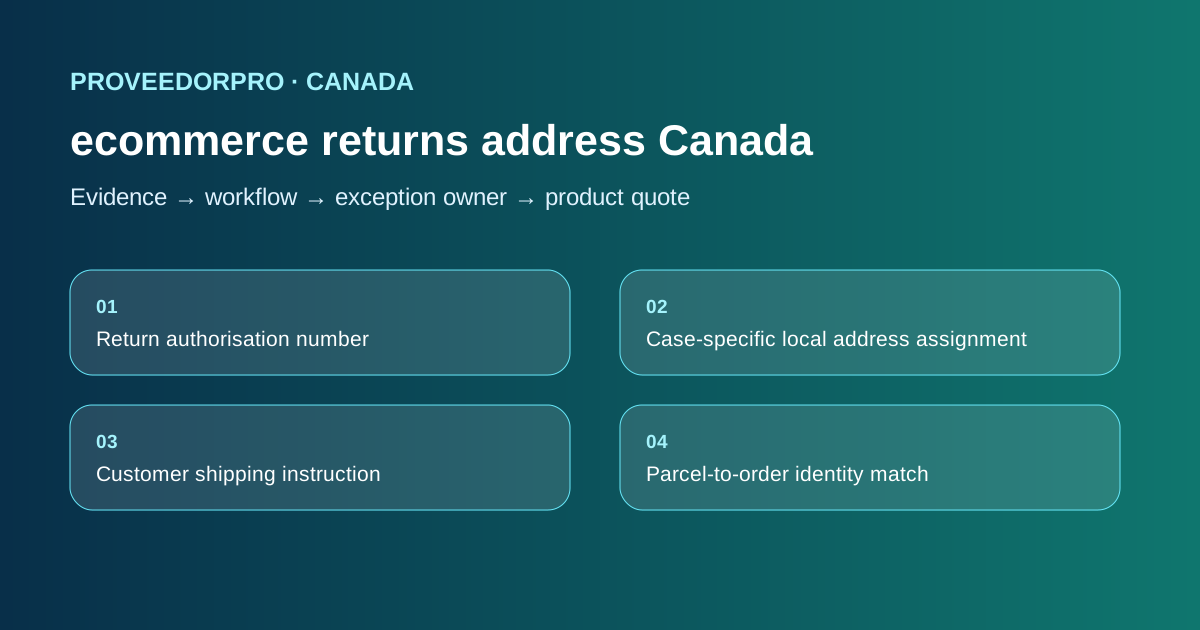
What to evaluate before choosing: ecommerce returns address Canada
Return authorisation number
A useful ecommerce returns address decision starts by making return authorisation number explicit. Record the exact variant, destination and current source, then name the person responsible for confirming it. The result is a decision a seller in Canada can audit instead of a promise that disappears at the first exception. If the answer changes by variant or destination, quote the case rather than advertising a universal promise.
Case-specific local address assignment
Case-specific local address assignment separates an attractive listing from a workable Canada operation. Ask for dated, product-specific evidence and compare it against the parcel and customer promise actually being sold. This also exposes whether the provider controls the event or merely forwards information from somebody else. The owner, alert and recovery action should be understandable to whoever answers the buyer.
Customer shipping instruction
For ecommerce returns address Canada, customer shipping instruction cannot remain an assumption. Map what enters this step, what a successful exit looks like and where the exception returns for action. Without that record, support has to reconstruct the order after the customer has already noticed the problem. Keep the approved evidence with the product record so the next order can reproduce the outcome.
Parcel-to-order identity match
The practical question behind parcel-to-order identity match is whether it still holds for the selected SKU. Validate it with one representative order and preserve the photo, scan, status or acknowledgement that closes the step. It prevents automation from making a mismatch travel faster between the physical parcel and digital order. That is the difference between a page-level claim and an operating condition ProveedorPro can actually verify.
Local receiving is available, but do not imply that every parcel is automatically accepted or that every return receives the same address, storage period, inspection, refund or disposition. Require return authorisation and case-specific instructions.
A practical operating workflow for ecommerce returns address Canada
- 1. Return authorisation number
A useful ecommerce returns address decision starts by making return authorisation number explicit. Record the exact variant, destination and current source, then name the person responsible for confirming it. The result is a decision a seller in Canada can audit instead of a promise that disappears at the first exception. If the answer changes by variant or destination, quote the case rather than advertising a universal promise.
- 2. Case-specific local address assignment
Case-specific local address assignment separates an attractive listing from a workable Canada operation. Ask for dated, product-specific evidence and compare it against the parcel and customer promise actually being sold. This also exposes whether the provider controls the event or merely forwards information from somebody else. The owner, alert and recovery action should be understandable to whoever answers the buyer.
- 3. Customer shipping instruction
For ecommerce returns address Canada, customer shipping instruction cannot remain an assumption. Map what enters this step, what a successful exit looks like and where the exception returns for action. Without that record, support has to reconstruct the order after the customer has already noticed the problem. Keep the approved evidence with the product record so the next order can reproduce the outcome.
- 4. Parcel-to-order identity match
The practical question behind parcel-to-order identity match is whether it still holds for the selected SKU. Validate it with one representative order and preserve the photo, scan, status or acknowledgement that closes the step. It prevents automation from making a mismatch travel faster between the physical parcel and digital order. That is the difference between a page-level claim and an operating condition ProveedorPro can actually verify.
- 5. Dated receiving photos
Treat dated receiving photos as a testable input, not provider sales copy. Put the answer in the operating brief with its proof, cutoff and recovery owner before increasing order volume. A small pilot is cheaper than discovering the missing handoff after paid traffic fills the queue. Recheck it whenever the supplier, packaging, carrier or store workflow changes.
- 6. Condition and accessory grading
A useful ecommerce returns address decision starts by making condition and accessory grading explicit. Record the exact variant, destination and current source, then name the person responsible for confirming it. The result is a decision a seller in Canada can audit instead of a promise that disappears at the first exception. If the answer changes by variant or destination, quote the case rather than advertising a universal promise.
- 7. Merchant decision deadline
For ecommerce returns address Canada, merchant decision deadline cannot remain an assumption. Map what enters this step, what a successful exit looks like and where the exception returns for action. Without that record, support has to reconstruct the order after the customer has already noticed the problem. Keep the approved evidence with the product record so the next order can reproduce the outcome.
- 8. Storage, consolidation or disposition instruction
The practical question behind storage, consolidation or disposition instruction is whether it still holds for the selected SKU. Validate it with one representative order and preserve the photo, scan, status or acknowledgement that closes the step. It prevents automation from making a mismatch travel faster between the physical parcel and digital order. That is the difference between a page-level claim and an operating condition ProveedorPro can actually verify.
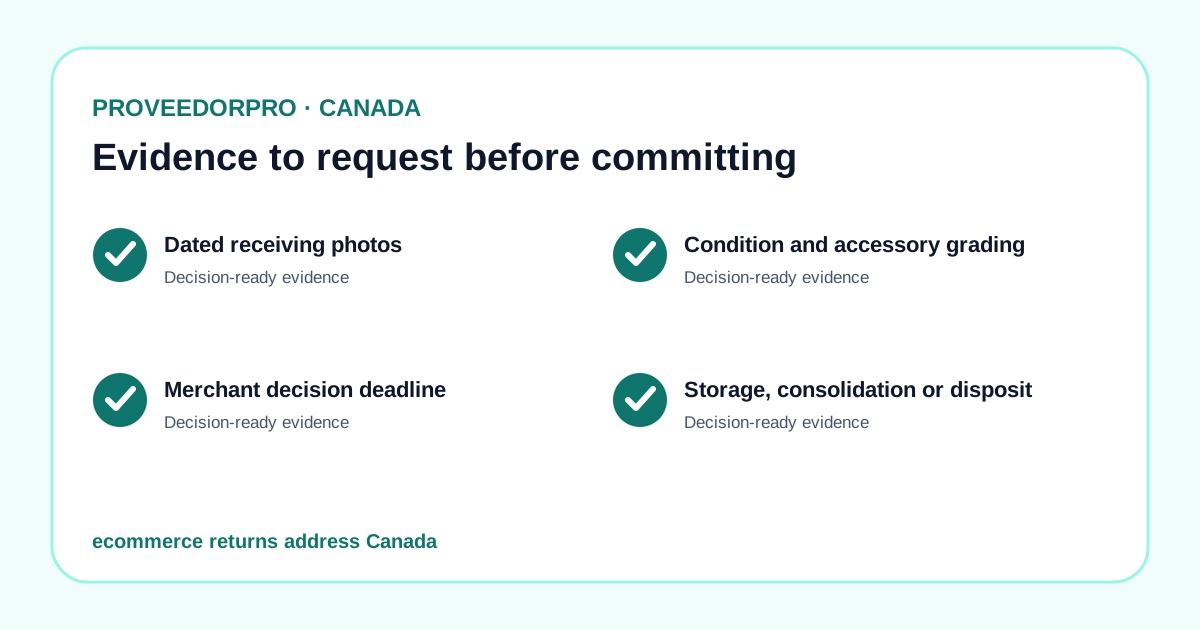
Evidence to request before committing
Dated receiving photos
Treat dated receiving photos as a testable input, not provider sales copy. Put the answer in the operating brief with its proof, cutoff and recovery owner before increasing order volume. A small pilot is cheaper than discovering the missing handoff after paid traffic fills the queue. Recheck it whenever the supplier, packaging, carrier or store workflow changes.
Condition and accessory grading
A useful ecommerce returns address decision starts by making condition and accessory grading explicit. Record the exact variant, destination and current source, then name the person responsible for confirming it. The result is a decision a seller in Canada can audit instead of a promise that disappears at the first exception. If the answer changes by variant or destination, quote the case rather than advertising a universal promise.
Merchant decision deadline
For ecommerce returns address Canada, merchant decision deadline cannot remain an assumption. Map what enters this step, what a successful exit looks like and where the exception returns for action. Without that record, support has to reconstruct the order after the customer has already noticed the problem. Keep the approved evidence with the product record so the next order can reproduce the outcome.
Storage, consolidation or disposition instruction
The practical question behind storage, consolidation or disposition instruction is whether it still holds for the selected SKU. Validate it with one representative order and preserve the photo, scan, status or acknowledgement that closes the step. It prevents automation from making a mismatch travel faster between the physical parcel and digital order. That is the difference between a page-level claim and an operating condition ProveedorPro can actually verify.
ProveedorPro operating record for ecommerce returns address Canada
No unrelated clip was forced onto this page. For a live ecommerce returns address Canada case, ProveedorPro creates a product-specific operating record so the seller can inspect the work rather than rely on a generic service promise.
- Return authorisation number recorded against the SKU, date and responsible operator
- Parcel-to-order identity match recorded against the SKU, date and responsible operator
- Dated receiving photos recorded against the SKU, date and responsible operator
- Storage, consolidation or disposition instruction recorded against the SKU, date and responsible operator
Customer and supplier identifiers stay private; the evidence standard remains specific to the quoted product, route and exception.
Decision matrix for Canadian sellers
| What to evaluate before choosing | Weak signal | Decision-ready evidence |
|---|---|---|
| Return authorisation number | A generic promise or catalogue label | Current, product-specific evidence and a named owner |
| Case-specific local address assignment | A generic promise or catalogue label | Current, product-specific evidence and a named owner |
| Customer shipping instruction | A generic promise or catalogue label | Current, product-specific evidence and a named owner |
| Parcel-to-order identity match | A generic promise or catalogue label | Current, product-specific evidence and a named owner |
| Dated receiving photos | A generic promise or catalogue label | Current, product-specific evidence and a named owner |
| Condition and accessory grading | A generic promise or catalogue label | Current, product-specific evidence and a named owner |
Canada-specific checks for this decision
Use a province-aware Canadian cost model
For ecommerce returns address Canada, quote the exact SKU in CAD and keep origin, classification, value, tax and courier fees visible. CBSA says mailed imports generally face 5% GST unless exempt, while HST or provincial taxes vary by destination; China-origin courier/mail goods generally retain the CAD 20 remission threshold rather than the higher US/Mexico thresholds. The page should never present one province or courier outcome as a Canada-wide landed cost.
Distinguish a customer parcel from a commercial import workflow
A dropshipped customer parcel and inventory imported commercially are not the same operating case. For ecommerce returns address Canada, identify the importer, invoice data, product description, country of origin and who handles corrections. CBSA says commercial importers need an import/export account and remain responsible for classification, valuation and records even when a broker or agent is used.
Make merchant decision deadline province- and carrier-aware
The page should show what the buyer sees before and after carrier handoff, including any brokerage or collection step that is outside ProveedorPro’s control. A CAD quote should name excluded fees rather than hiding them behind a “fast shipping” label.
Canadian operating context: ecommerce returns address Canada
CAD selling price and destination-specific customer promise separates an attractive listing from a workable Canada operation. Ask for dated, product-specific evidence and compare it against the parcel and customer promise actually being sold. This also exposes whether the provider controls the event or merely forwards information from somebody else. The owner, alert and recovery action should be understandable to whoever answers the buyer.
A useful ecommerce returns address decision starts by making local consumer expectations, returns and support language in English explicit. Record the exact variant, destination and current source, then name the person responsible for confirming it. The result is a decision a seller in Canada can audit instead of a promise that disappears at the first exception. If the answer changes by variant or destination, quote the case rather than advertising a universal promise.
Treat official import and platform guidance checked at decision time as a testable input, not provider sales copy. Put the answer in the operating brief with its proof, cutoff and recovery owner before increasing order volume. A small pilot is cheaper than discovering the missing handoff after paid traffic fills the queue. Recheck it whenever the supplier, packaging, carrier or store workflow changes.
Frequently asked questions
Return authorisation number: what must ecommerce returns address Canada prove?
For the buyer job “ecommerce returns address Canada”, confirm return authorisation number with the exact product, destination and current operating method. Keep the evidence with the ecommerce returns address Canada decision record, including the date, responsible person and response if the result is wrong. Check this FAQ item again after any supplier, platform, packing or route change.
Customer shipping instruction: what must ecommerce returns address Canada prove?
For the buyer job “ecommerce returns address Canada”, confirm customer shipping instruction with the exact product, destination and current operating method. Keep the evidence with the ecommerce returns address Canada decision record, including the date, responsible person and response if the result is wrong. Check this FAQ item again after any supplier, platform, packing or route change.
Dated receiving photos: what must ecommerce returns address Canada prove?
For the buyer job “ecommerce returns address Canada”, confirm dated receiving photos with the exact product, destination and current operating method. Keep the evidence with the ecommerce returns address Canada decision record, including the date, responsible person and response if the result is wrong. Check this FAQ item again after any supplier, platform, packing or route change.
Merchant decision deadline: what must ecommerce returns address Canada prove?
For the buyer job “ecommerce returns address Canada”, confirm merchant decision deadline with the exact product, destination and current operating method. Keep the evidence with the ecommerce returns address Canada decision record, including the date, responsible person and response if the result is wrong. Check this FAQ item again after any supplier, platform, packing or route change.
Storage, consolidation or disposition instruction: what must ecommerce returns address Canada prove?
For the buyer job “ecommerce returns address Canada”, confirm storage, consolidation or disposition instruction with the exact product, destination and current operating method. Keep the evidence with the ecommerce returns address Canada decision record, including the date, responsible person and response if the result is wrong. Check this FAQ item again after any supplier, platform, packing or route change.